| |
| Wednesday, 14 October 2026 |
| The Power & Glory of our English Country Houses |
| Anthony Russell |
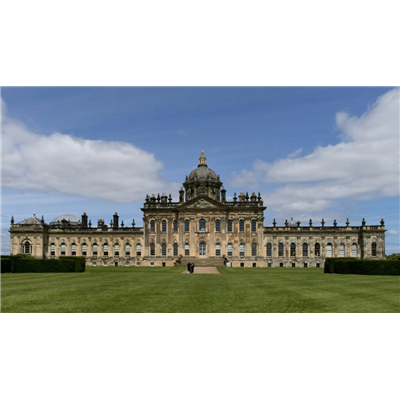 |
It is often argued that Britain possesses the finest collection of ‘living’ stately homes in the world. It is harder to deny that they represent one of the country's greatest assets and its greatest contribution to the decorative arts worldwide. This lecture goes back in time to explain their origins in British history, the changing nature of society and the way country houses have evolved. This journey through their history illustrates the most magnificent examples in all their grandeur and beauty, while considering the impact they have had on society and its development. Consideration is given to changing roles and if they can still exert a powerful hold on society. How should we look on them today and how are they to survive and evolve in the future? Anthony Russell As a cultural historian, writer and artist Anthony Russell has travelled much of the world. Lecturing originally to American university students on bespoke tours of Europe, he has lectured for the Arts Society since 2010. He spent six years as a consultant for Luke Hughes advising on the furniture needs of prestigious buildings throughout Britain, including museums, palaces, and cathedrals. At the British Museum, where for many years he ran outreach events and hosted visiting lecturers, he has been described as "Hugh Grant meets the Dalai Lama.” Committed to the 'search for civilisation' and as an advocate of nonviolence, he is the founder of The Chandos; supporting causes that promote understanding and cooperation, is on the committee for Uniting for Peace and a contributor to the All-Party Parliamentary Group on Democracy in Burma. He is author of the book ‘Evolving the Spirit - From Democracy to Peace' commended by Aung San Suu Kyi, the Nobel Peace Laureate, as meaning a great deal to her. He was also Founder of the Brockley Festival of Ideas and a Founding Advocate of CIVIL-ISATION. He is currently undertaking research for a new book on civilisation; what it is, whether we have it & how you get it. |
|
| Wednesday, 11 November 2026 |
| John Singer Sargent: The Private Radical |
| Gavin Plumley |
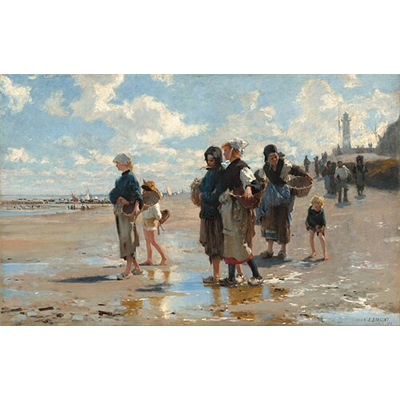 |
Whether drawing duchesses or portraying princes, John Singer Sargent (1856–1925) was high society’s leading portraitist. Flaunting a consummate technique, his luxurious canvases mirrored his subjects’ wealth. Yet beneath the dazzling veneer of works such as Madame X, The Daughters of Edward Darley Boit and Lady Agnew of Lochnaw lurks a much rawer world by far. Sargent certainly scandalised Parisian society and the city’s Salon with his frank depictions of human sexuality, yet he was even more modern than they might have feared. This talk charts the artist’s life and his prolific output, showing that, like the era he came to represent, Sargent was always on the cusp of seismic change. Gavin Plumley A writer and broadcaster. Appears on BBC Radio 3 and 4, and contributes to newspapers, magazines and opera and concert programmes worldwide. Lectures widely about the culture of Central Europe. Recent appearances include Klimt and The Kiss in cinemas worldwide, and talks for the Hay and Cheltenham Literature Festivals, the Royal Opera House, the National Gallery, the National Trust, the National Theatre, the British Museum and the V&A. His first book, A Home for All Seasons, was published in 2022; his second, The Gay Apocalypse: Queer Life and Culture in Vienna 1900 will be released next year. |
|
| Wednesday, 09 December 2026 |
| After Gertrude Jekyll: English Gardens of the 20th Century. |
| James Bolton |
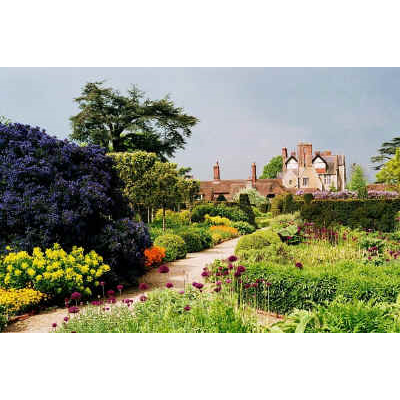 |
The English garden of the early years of the C20th was almost as significant, in terms of worldwide influence, as the landscapes of William Kent and ‘Capability’ Brown. The gardens created, in particular by Sir Edwin Lutyens and Gertrude Jekyll, set a standard against which English gardens would be measured for the next 60 years. Modernism, instinctively mistrusted by the English, swept over Europe and America at precisely this period and only in the 1960s and ‘70s, were brave steps taken to establish an alternative to the Arts and Crafts style. The third and contemporary strand of C20th garden design is different again, a curious mixture of formality, harking back to the C17th, and informality influenced by the new planting schemes from Holland and Germany. The best contemporary gardens, which point the way forward to the twenty-first century, combine these two elements. James Bolton Inchbald School of Design 1990 (Dip ISD). Head Gardener, Old Rectory Farnborough 1990-92. Faculty Director, Design History, Inchbald School of Design. Garden Designer 1992-. A lecturer for The Arts Society since 1995. Organiser of The Arts Society's garden study days and tours in UK and Europe. Organises tours to the best private gardens in the UK, Italy, France and South Africa. Garden Mania, a book on garden ornaments, published in 2000. |
|
| Wednesday, 13 January 2027 |
| The Legend of the Briar Rose |
| Amy Lim |
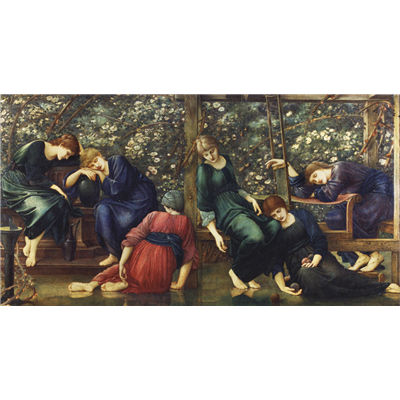 |
Leading Pre-Raphaelite artist Edward Burne-Jones was consumed for decades by his Briar Rose series of paintings, one of the greatest works of Victorian art. They tell the story of Sleeping Beauty in a mystical dream-world that intertwines medieval romance, decorative craftsmanship and natural beauty. Their exhibition in 1890 caused a sensation, and artists, royalty and thousands of ordinary people flocked to see them. This lecture will look at these beautiful paintings in depth, and recount their creation, exhibition, and the magnificent setting that Burne-Jones designed for them at Buscot Park in Oxfordshire, where they still hang today. Dr Amy Lim Dr Amy Lim is an art historian and curator, specialising in British fine and decorative arts from the seventeenth to twentieth centuries. She is curator of the Faringdon Collection at Buscot Park, Oxfordshire, and the Stanley Spencer Gallery, Cookham, and a Departmental Tutor at Oxford Lifelong Learning. She has curated and contributed to numerous exhibitions, including British Baroque: Power and Illusion (Tate, 2020), Now You See Us: Women Artists in Britain, 1520-1920 (Tate, 2024) and Love & Landscape: Stanley Spencer in Suffolk (Gainsborough’s House, Sudbury and the Stanley Spencer Gallery, 2025-6). Amy has degrees in History, and Literature & Arts from the Universities of Oxford and Cambridge, and has published articles and essays on a variety of art-related topics from gothic garden monuments to female patronage. |
|
| Wednesday, 10 February 2027 |
| Murder, Sex & Mayhem in English Churches |
| John Vigar |
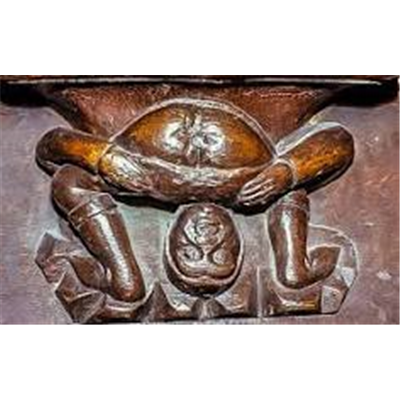 |
The peaceful setting of most of our medieval churches cannot cover up the fact that they contain images and references to less savoury aspects of life. Medieval murals and stained glass depict the martyrdom of saints from home and abroad, and the grisliest of dooms. Underneath misericords are images of whippings, wife beatings, and brawls whilst stone carvings depict sexual imagery rarely associated with religious buildings. Finally there are many monuments and memorials that show scenes of murder and mayhem in goodly measure including stagecoach crashes, bridge collapses, falling trees, falling bridges, falling chimneys, shootings, stabbings, mine collapses, shipwrecks and explosions. John Vigar "John Vigar, I am certain, has visited more churches in England and Wales than anyone now living; more, probably, than anyone who has ever lived; and more, there is a fair chance, than anyone ever will." Peter Ross, Steeplechasing, Headline Publishing, 2023. Professional ecclesiastical historian, author and broadcaster for over 50 years, John has visited and recorded over 13,000 churches in England and Wales. He is a trustee of the oldest church conservation body in Britain - The Friends of Friendless Churches. Formerly an employee of The Churches Conservation Trust, John has also served as Photographic Curator of The Kempe Trust and Hon. Secretary of The Ledgerstone Survey of England and Wales. For many years John taught at the University of Kent as well as at other academic institutions. He is a member of the Advisory Council of the Norfolk Churches Trust and is the author of 17 books. In addition to his lecturing and writing, John leads specialist church tours, including many as follow-ups to his lectures. Audiences enjoy John`s casual manner and humour - he has now presented over 3,500 lectures. |
|
| Wednesday, 10 March 2027 |
| Love is Enough: at Home with Jane & William Morris |
| Dr Suzanne Fagence Cooper |
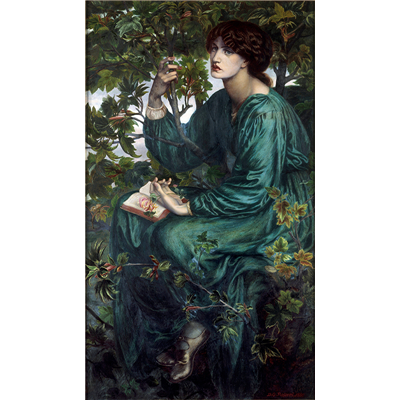 |
William Morris wrote:’The secret of true happiness lies in taking a geniune interest in all the details of daily life.’ This lecture looks at the houses and works of art that Jane & William made together, from the Red House to Kelmscott Manor. Through newly revealed letters & diaries, furniture, wall-hangings & beautiful books, we can explore the pioneering life they embraced with their artist friends. Dr Suzanne Fagence Cooper Dr Suzanne Fagence Cooper is an art historian working on 19th and 20th Century British art. She was a curator and Research Fellow at the V&A Museum, and is currently Honorary Visiting Fellow at the University of York. She has curated a major exhibition on John Ruskin and J.M.W.Turner, and she is planning a new exhibition project on William Morris and his family for 2025. Suzanne is the author of 'To See Clearly: Why Ruskin Matters', 'Effie Gray' and 'Pre-Raphaelite Art in the V&A Museum'. She is a trustee of the Burne-Jones catalogue raisonné and has worked as a consultant for TV and film projects, including 'The Invisible Woman' with Ralph Fiennes. She leads art history tours in England, France and Switzerland, and is an invited speaker for Cunard. Her latest book is 'How We Might Live: At Home with Jane and William Morris'. |
|
| Wednesday, 14 April 2027 |
| Adventures in Three Dimensions |
| Dr Justine Hopkins |
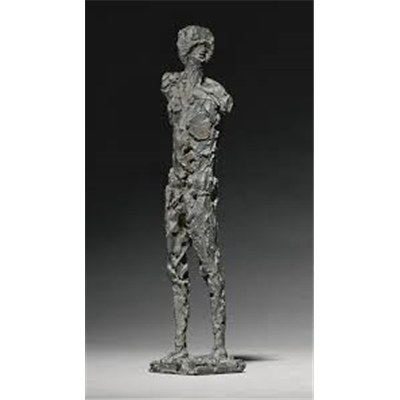 |
Modern sculpture is mysterious to many people, notoriously difficult and inaccessible, and often made more so rather than less by critical exposition. The works of Epstein, Moore, Hepworth, Frink and their contemporaries stand at the heart of our time, yet it is easy to be intimidated where we should be enthralled. Sculptors in the last century discovered a three-dimensional language as flexible and expressive as music or poetry, capable of revealing the rhythms and meanings of life itself – their legacy remains in works which should be approached as an exploration, an adventure, something to be enjoyed. This lecture sets out to prove that we can all be explorers. Dr Justine Hopkins Dr. Justine Hopkins is a writer and freelance lecturer in Art History, currently living in Bristol. She took a BA Hons degree at Bristol University, reading English and Drama, then changed direction and did an MA in Art History at the Courtauld Institute. After eighteen months working as an archaeological illustrator, partly in Belize, she returned to Art History, gaining a PhD from Birkbeck College, London for her research into the relationship between science, religion and landscape painting from the French Revolution to Darwin’s Origin of Species. Since then she has worked freelance as an Art History lecturer and writer: for Bristol, London, Oxford and Cambridge Universities; Tate Britain and Tate Modern, the National and National Portrait Galleries; the Victoria and Albert Museum; Sotheby’s, Christies’ and assorted independent institutions. She is also a registered lecturer for The Arts Society. Justine is the step-granddaughter of the sculptor and painter Michael Ayrton, and the main point of contact for all matters connected with his work. |
|
| Wednesday, 12 May 2027 |
| The Textile Revolution |
| Ashley Gray |
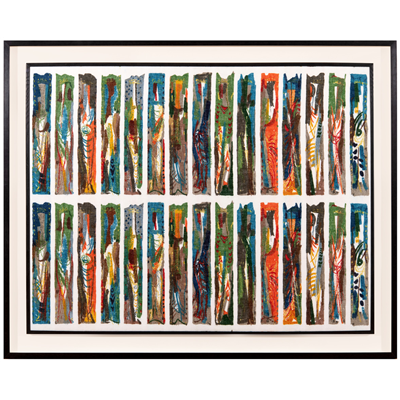 |
The history of Britain is intricately woven with the history of textiles. Following World War II there was a desire for change, colour, and inspiration in the home. This energy and innovation was led by female textile designers destined to revolutionise design internationally for decades to come. This lecture celebrates their vision, their influences and their determination that successfully brought modern and contemporary art into the home through their designs and thereby democratising modern art for the first time by making it literally a part of the furniture. Post war, the world of fashion, interiors and modern art fused with dynamic results. Czech emigrees Zika and Lida Ascher left Prague in 1939. Their modernist aesthetic took London fashion by storm, commissioning leading modern artists from Moore to Topolski, from Derain to Matisse. Ascher through fashion brought modern art into the heart of fashion and joyous colours onto the street. This lecture considers the role fashion and textiles played in democratising modern art through the eyes two innovative textile visionaries. An amazing story of courage, tenacity and success. Ashley Gray Ashley Gray is a leading specialist and curator in the key art discipline of Modern Textiles and their history. He is a regular vetter at international fine art fairs and has served on the Fair Committees of BADA, The Works on Paper Fair and on the BADA Council. He is regularly invited to lecture on the subject both in the UK and the US. As a curator and archivist, he works with institutions and foundations on conservation and exhibition projects. Most recently he curated Styled by Design at Cromwell Place in London, an exhibition that celebrates the innovation of Modernist textile design. He co-curated Material Textile: Modern British Female Designers and Material Textile: Creativity, History & Process, both with Messums Gallery, Common Thread at New Art Centre and From Bauhaus to our House also at Cromwell Place. He is currently researching the role David Whitehead Ltd in Lancashire played in commissioning innovative modern designs in the Festival of Britain era. An exhibition is planned for 2027. |
|
| Wednesday, 09 June 2027 |
| All Singing, All Dancing Shakespeare |
| Sarah Lenton |
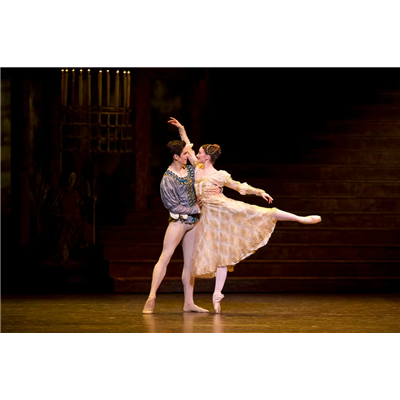 |
Shakespeare without the words? Composers and choreographers are always using Shakespeare as a spring-board, but only the greatest have pulled it off. Amongst that band are Verdi, Berlioz, Britten, Frederick Ashton and Kenneth MacMillan with their versions of Macbeth, Romeo and Juliet and Midsummer Night’s Dream. Coming up in the fast lane is Christopher Wheeldon with his recent ballet based on The Winter’s Tale. Well-meaning casualties are Rossini, Auber and Bellini. What’s the difference? Possibly the way the first group lets Shakespeare free them up. I’ll be exploring this idea using clips from the operas and ballets, and first hand accounts from the artists themselves. Sarah Lenton Sarah Lenton has spent her working life in the theatre: her principal employers are the Royal Opera House, English National Opera, Glyndebourne Festival Opera and Garsington Opera. She writes programme articles, radio scripts, gives lectures on the operas and ballets in the rep. and broadcasts regularly for BBC Radios 3 and 4. She is also a cartoonist. All the talks listed come with audio and/or video clips. |
|
| Wednesday, 14 July 2027 |
| Oh We Do Like to be Beside the Seaside |
| Ian Gledhill |
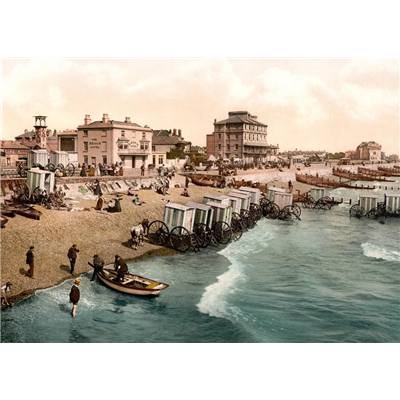 |
A light-hearted look at seaside entertainment over the years, from Bathing Machines to End of the Pier Shows and “What the Butler Saw” machines. The British seaside began with the fashion for sea bathing in the 18th century, but expanded enormously in the 19th century with the arrival of the railways and the era of mass travel. We look at the specialist buildings which proliferated at the seaside in the 19th century, such as piers, towers and aquaria, that provided entertainment for the masses – not to mention that famous breed, the seaside landlady! Ian Gledhill Ian Gledhill has had a very varied career, from designing underground railways as an engineer for London Transport, to appearing in pantomime with Julian Clary. In between he has worked in travel and tourism, music publishing, television, and especially the theatre, where he has been an actor, director, set designer, stage manager and opera translator. His main interests include architecture, history, transport and classical music, especially opera and operetta, and these are reflected in the wide ranging list of subjects for his lectures. |
|